



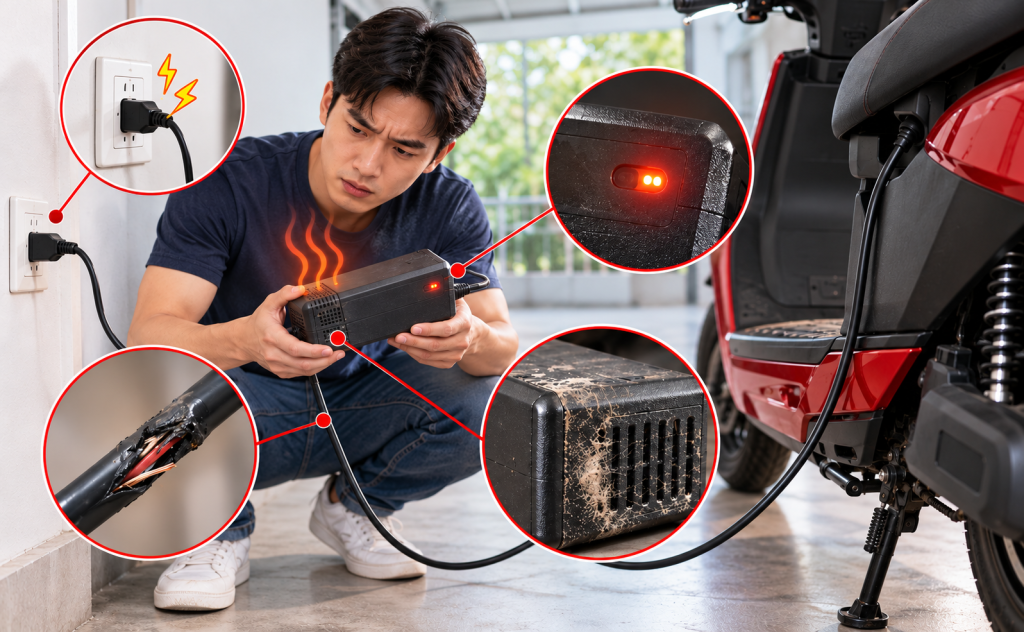
A battery charger is an essential device for supplying power to electric bicycles and electric motorcycles. When a charger malfunctions, the charging process may be interrupted, preventing the battery from receiving a full charge and potentially affecting its service life if used improperly. So, how can you identify a faulty battery charger? XUPAI explains the common warning signs below.
1. The Charger Indicator Light Does Not Turn On
One of the easiest signs to recognize is when the charger indicator light remains off after the device is connected to a power source. Possible causes include a damaged power cord, a loose plug, an unstable power supply, or faulty internal components.
First, check the power outlet, power cord, and connection points. If the power supply is working normally but the charger shows no indication, the device may require technical inspection.
2. Charging Takes Longer Than Usual
If charging takes significantly longer than normal, the charger may have an output current problem or a voltage conversion issue. However, this may also result from battery aging, reduced battery capacity, or unsuitable ambient temperatures.
Therefore, a longer charging time alone does not necessarily mean the charger is faulty. Both the charger and the battery should be checked to identify the actual cause.
3. The Charging Indicator Does Not Change
Many chargers display a red light during charging and switch to green when charging is complete. If the indicator remains in an unusual state, flashes continuously, or suddenly turns off, the charger or battery may be experiencing a problem.
Indicator behavior varies by charger model. Always refer to the manufacturer’s instructions before determining whether the device is operating abnormally.
4. The Charger Overheats or Produces a Burning Smell
A charger may become warm during normal operation. However, if it becomes excessively hot, produces a burning smell, makes unusual noises, or shows visible burn marks, disconnect the power immediately when it is safe to do so.
Do not continue using a charger that shows signs of damage. Avoid dismantling the device unless you have the appropriate technical expertise.
5. The Battery Does Not Charge When Connected
If the charger is connected correctly but the battery does not charge, the cause may be a faulty charger, damaged cables, poor terminal connections, or a problem with the battery itself.
For an accurate diagnosis, use appropriate testing equipment and have a qualified technician check the charging voltage and current against the manufacturer’s specifications.
6. How to Use a Battery Charger Safely
To reduce the risk of charger failure, choose a charger that matches the battery type, system voltage, and charging requirements specified by the manufacturer. Never use a charger with exposed wires, loose connectors, or visible damage.
Keep the charger in a dry, well-ventilated area and avoid covering it during operation to ensure proper heat dissipation.
Recognizing the warning signs of a faulty battery charger early can help prevent charging interruptions and reduce safety risks. If you notice any abnormal signs, stop using the device and have both the charger and battery inspected before resuming charging.
XUPAI provides battery solutions for electric vehicles, focusing on reliable performance and long-lasting service life.