



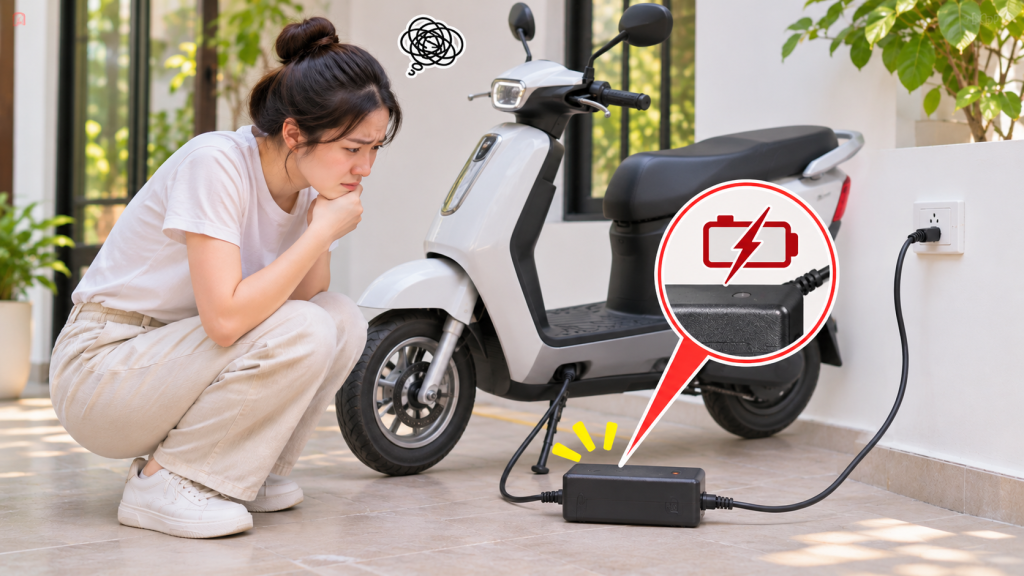
An electric vehicle battery not charging is a common problem that can affect the daily use of electric bikes and scooters. Even after connecting the charger to the power supply and the vehicle, the battery may fail to charge, take unusually long to charge, or display abnormal indicator lights. This issue can be caused by the charger, electrical connections, or the battery itself.
So, why is your electric vehicle battery not charging, and how can you fix it? Let’s explore the seven most common causes and their solutions with XUPAI.
1. Faulty or Incompatible Battery Charger
This is one of the most common reasons for charging problems. Over time, internal charger components may become damaged, cables may break, or electrical circuits may malfunction. Using a charger with an incorrect voltage or incompatible specifications can also prevent normal charging.
Solution: Check the charging cable, plug, and indicator lights. Always use a charger that matches the battery’s technical specifications.
2. Loose Charging Cables or Connections
Loose, oxidized, or dirty connections between the charger, charging port, and battery system can interrupt electrical current and prevent the battery from charging properly.
Solution: Inspect the external cables and connection terminals. If any connections are damaged or corroded, have them repaired by a qualified technician.
3. Deeply Discharged Battery
When an electric vehicle remains unused for an extended period or the battery is repeatedly allowed to discharge completely, its voltage may drop to an excessively low level. Some chargers may then fail to recognize the battery or initiate the charging process.
Solution: Avoid leaving the battery completely discharged for long periods. If deep discharge occurs, have each battery checked to determine whether it can be recovered.
4. Aged or Degraded Battery
After numerous charge and discharge cycles, a battery gradually loses its ability to store energy. In lead-acid batteries, sulfation on the plates can also reduce the battery’s charge acceptance and overall performance.
Solution: Regularly check battery voltage, capacity, and operating condition. If the battery has significantly deteriorated, replacement may be necessary.
5. One Battery in the Battery Pack Is Damaged
Electric vehicles commonly use multiple batteries connected in series to achieve the required operating voltage. If one battery becomes damaged, short-circuited, or develops an abnormal voltage, the entire battery pack may operate improperly, affecting the charging process.
Solution: Have a qualified technician test each battery individually to identify the faulty unit. Avoid replacing a single battery without checking its compatibility with the existing battery pack.
6. Protection System or Electrical Circuit Failure
Some electric vehicles are equipped with battery management and protection systems. When abnormal voltage, excessive temperature, or connection faults are detected, the system may interrupt charging to protect the battery and ensure safety.
Solution: Have the electrical system and protection components inspected by a professional technician. Never bypass safety protection circuits or modify electrical connections without proper technical knowledge.
7. Unsuitable Environmental Temperature
Both excessively high and low temperatures can affect battery charging performance. When a battery becomes too hot after operation or is exposed to extreme environmental conditions, its ability to accept a charge may be reduced.
Solution: Park the vehicle in a dry, well-ventilated, and shaded area. If the battery is still hot after use, allow its temperature to return to an appropriate range before charging, following the manufacturer’s recommendations.
How to Prevent Electric Vehicle Battery Charging Problems
To reduce the risk of an electric vehicle battery not charging, users should develop the following good habits:
Always use a charger with the correct technical specifications.
Avoid leaving the battery completely discharged for extended periods.
Regularly inspect charging cables and connection terminals.
Avoid parking the vehicle under direct sunlight or in excessively hot environments.
Maintain and inspect the battery according to the manufacturer’s recommendations.
An electric vehicle battery not charging can result from various issues, including faulty chargers, loose electrical connections, and battery degradation. Identifying the actual cause is essential for choosing the right solution and avoiding unnecessary component replacements.
At XUPAI, we are committed to providing battery products and energy solutions for electric bicycles and electric scooters. Choosing the right battery and maintaining proper charging and usage habits are essential to ensuring stable performance and long-lasting operation.