



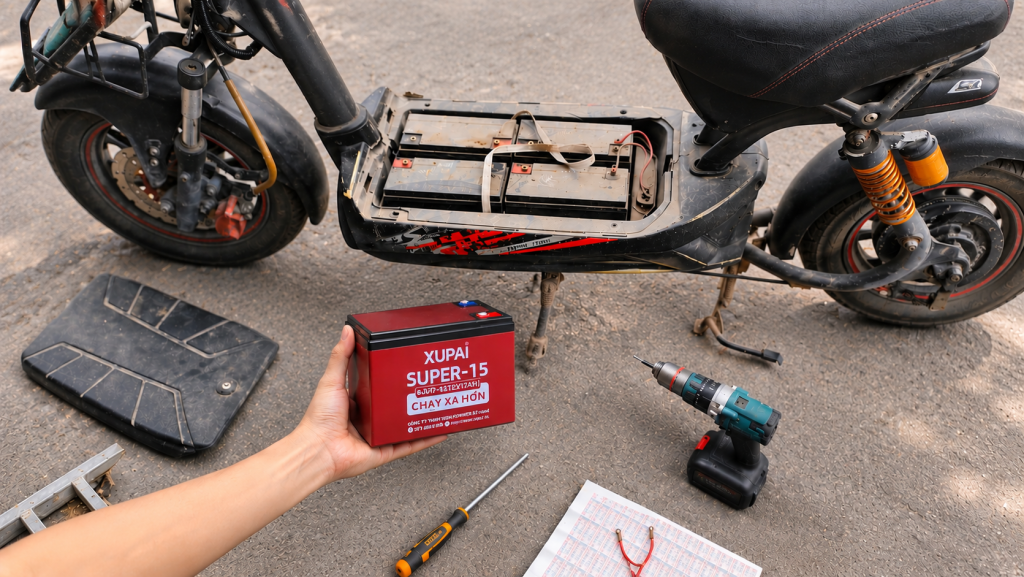
The battery is one of the most important components of an electric vehicle, as it directly affects vehicle performance and driving range. However, over time, battery capacity and performance gradually decline. So, how long does an electric vehicle battery last before it needs replacing? What are the signs of battery deterioration, and when should users consider getting a new one? Let’s explore these questions with XUPAI.
1. What Is the Average Lifespan of an Electric Vehicle Battery?
Generally, lead-acid batteries used in electric vehicles have an average lifespan of approximately 2 to 5 years. However, this period may vary depending on battery quality, usage frequency, environmental conditions, and charging habits.
Several factors can affect battery lifespan:
Usage frequency: Vehicles that frequently travel long distances, carry heavy loads, or operate continuously may experience faster battery deterioration.
Charging habits: Improper charging, using an incompatible charger, or frequently allowing the battery to become completely discharged can negatively affect battery lifespan.
Environmental conditions: Excessively high temperatures or unsuitable storage conditions may reduce battery durability.
Product quality: Batteries from reliable manufacturers, with controlled production processes and quality components, generally offer more stable performance.
2. Signs That Your Electric Vehicle Battery Needs Replacing
An electric vehicle battery does not always fail suddenly. In many cases, users can identify battery deterioration through the following signs:
Significantly Reduced Driving Range
If your vehicle previously traveled longer distances but now runs out of power much faster under similar riding conditions, this may indicate reduced battery capacity.
Reduced Power and Acceleration
When the battery can no longer deliver sufficient energy, the vehicle may become weaker and accelerate more slowly, especially when carrying passengers or traveling uphill.
Unusual Changes in Charging Time
A deteriorating battery may take noticeably longer or shorter to charge than before. However, the charger and electrical system should also be inspected to identify the actual cause.
Battery Swelling or Leakage
These are warning signs that require particular attention. If the battery casing becomes deformed, swollen, or shows signs of leakage, users should stop using and charging the battery and have it inspected by a qualified technician.
3. Should You Continue Using a Weak Electric Vehicle Battery?
Continuing to use a deteriorating battery may affect vehicle performance and reduce its driving range.
In particular, if one or more batteries in a battery pack develop problems, the entire system may operate inefficiently. For electric vehicles using multiple batteries connected in series, differences in battery condition and voltage should also be checked.
Users should not attempt to disassemble the battery or replace individual units without first assessing the entire battery pack. A qualified technician should check the voltage, capacity, and operating condition of each battery before recommending a replacement.
4. How to Extend the Lifespan of an Electric Vehicle Battery
To help prevent premature battery deterioration, users should follow these recommendations:
Use a charger with specifications compatible with the battery pack.
Charge the vehicle in a dry, well-ventilated area, away from excessive heat.
Avoid allowing the battery to remain completely discharged for extended periods.
Do not use damaged chargers or chargers showing signs of malfunction.
Regularly inspect the battery and the vehicle’s electrical system.
Choose products from reputable manufacturers with specifications suitable for the vehicle.
5. When Should You Replace an Electric Vehicle Battery?
Users should consider replacing the battery when its capacity has significantly decreased, it can no longer meet daily driving requirements, or it shows signs of physical damage such as swelling, leakage, or deformation.
Before replacing the battery, have the entire system inspected to identify the underlying problem. Choose a replacement battery with the correct voltage and capacity according to the vehicle manufacturer’s specifications.
How long does an electric vehicle battery last before it needs replacing? The answer depends on product quality, usage frequency, and maintenance habits. Lead-acid batteries generally have an average lifespan of around 2 to 5 years. However, users should evaluate the actual battery condition rather than relying solely on its age.
XUPAI recommends regular battery inspections, proper charging practices, and choosing quality battery products to maintain stable performance and extend the