



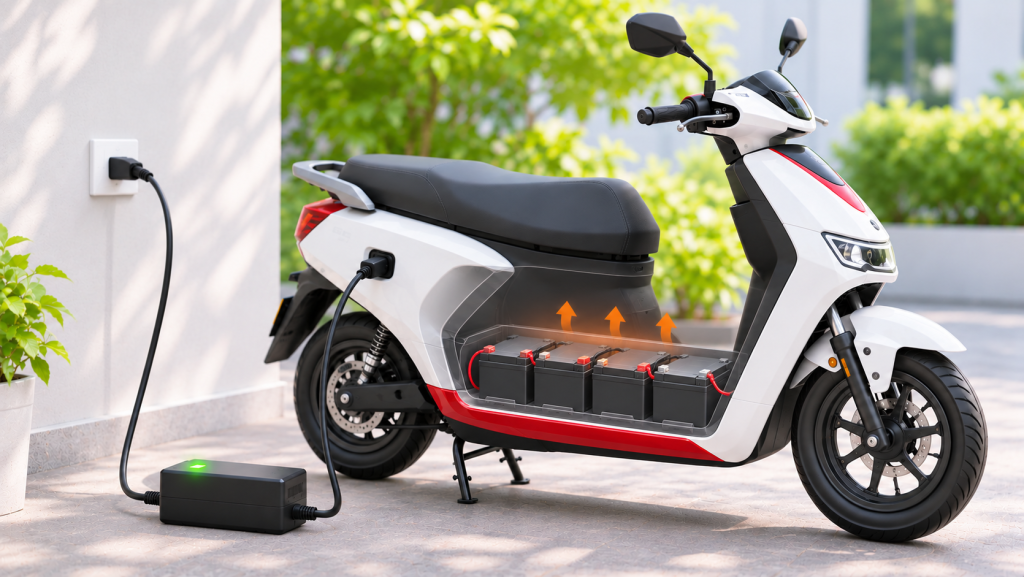
During everyday electric vehicle use, many users notice that their battery gets hot while charging and wonder whether this is a sign of damage. In fact, batteries may become slightly warm during charging due to internal electrochemical reactions. However, excessive temperature increases can indicate improper charging practices, an incompatible charger, or an underlying battery problem.
So, why does a battery get hot while charging, and what precautions should users take to ensure safe operation?
1. Why Does a Battery Get Hot While Charging?
There are several reasons why a battery may become hot during the charging process. The most common causes include:
Using an incompatible charger: Different batteries have specific charging voltage and current requirements. Using a charger with incompatible specifications may cause excessive charging, generate additional heat, and affect battery lifespan.
Charging for too long: Continuing to charge a fully charged battery, especially when using a charger without appropriate automatic charging control, may increase battery temperature and accelerate performance deterioration.
Battery aging or damage: Over time, internal battery components gradually deteriorate. Increased internal resistance or other internal faults may cause the battery to generate excessive heat during charging.
High ambient temperatures: Charging an electric vehicle in an enclosed, poorly ventilated, or excessively hot environment can prevent heat from dissipating properly, causing the battery temperature to rise.
2. Is It Dangerous If a Battery Gets Hot While Charging?
Not every increase in battery temperature is dangerous. A slight and stable temperature rise during charging can be a normal occurrence.
However, users should pay attention to the following warning signs:
The battery becomes excessively hot or its temperature rises rapidly.
The battery casing becomes swollen, deformed, or cracked.
Unusual odors, hissing sounds, or electrolyte leakage appear.
The charger or electrical connections become abnormally hot.
These symptoms may indicate an electrical problem or internal battery damage. If any of these signs occur, stop charging and arrange an inspection to prevent potential safety risks.
3. What Should You Do If Your Battery Gets Hot While Charging?
If you notice abnormal battery heating, take the following precautions:
Stop charging: Immediately stop charging if the battery temperature rises abnormally. If there is smoke, sparking, or a potential fire hazard, move away and contact emergency services.
Check the charger: Make sure the charger’s output voltage and current match the battery’s technical specifications.
Ensure proper ventilation: Avoid charging in enclosed areas, near heat sources, or under direct sunlight.
Inspect the battery: If the battery is swollen, leaking, or producing unusual odors, stop using it and contact a qualified technician.
Do not disassemble the battery: Unauthorized disassembly may create safety hazards and affect battery performance.
4. How to Prevent Battery Overheating While Charging
To minimize battery overheating and maintain long-term performance, users should develop the following charging habits:
Use the original charger or a charger with compatible specifications.
Charge in a dry, well-ventilated area away from direct sunlight.
Do not cover the battery or charger during charging.
Regularly inspect charging cables, connectors, and the external condition of the battery.
Always follow the manufacturer’s charging and maintenance instructions for each battery type.
A battery gets hot while charging due to either normal temperature changes during the charging process or potential warning signs of equipment or battery failure.
Choosing a compatible charger, following proper charging practices, and performing regular maintenance can help maintain battery performance and extend its service life.
At XUPAI, we are committed to providing high-quality battery products and energy solutions for the electric vehicle industry. By adopting proper charging and maintenance habits, users can help ensure safer and more efficient battery operation.