



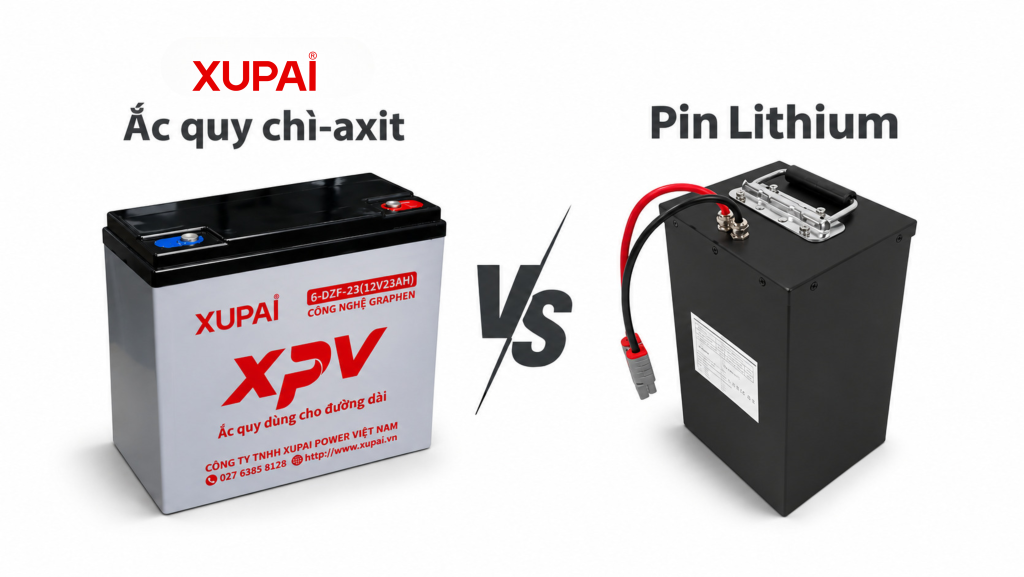
In the electric mobility industry, lead-acid batteries and lithium batteries are two widely used energy storage technologies. Although lithium battery technology continues to advance, lead-acid batteries vs. lithium batteries still differ significantly in terms of cost, technology, applications, and overall investment value.
So, why do many manufacturers, distributors, dealers, and consumers continue to choose lead-acid batteries? Let’s explore the key differences between these two technologies and the advantages that make lead-acid batteries a practical choice for many electric vehicles.
1. What Is a Lead-Acid Battery?
A lead-acid battery is an energy storage device that generates and stores electrical energy through chemical reactions involving lead plates, lead dioxide, and a sulfuric acid electrolyte (H₂SO₄).
With decades of development and widespread application, lead-acid battery technology has established relatively mature manufacturing processes, accessible supply chains, and the ability to meet various energy storage requirements.
Today, lead-acid batteries are widely used in electric bicycles, electric scooters, backup power systems, and industrial equipment.
Key advantages of lead-acid batteries include:
Relatively low initial investment costs.
Mature and well-established manufacturing technology.
Wide market availability and convenient replacement.
Compatibility with many electric vehicle systems designed for lead-acid batteries.
Well-developed collection and recycling infrastructure in many markets.
2. What Is a Lithium Battery?
A lithium-ion battery is an energy storage technology that uses lithium ions moving between two electrodes during charging and discharging.
Common types include Lithium Iron Phosphate (LiFePO4) and Lithium Nickel Manganese Cobalt Oxide (NMC).
Lithium batteries are widely used in electric vehicles and energy storage systems due to their high energy density, allowing them to store more energy with relatively less weight.
Key advantages of lithium batteries include:
Lightweight design and high energy density.
Faster charging, depending on battery configuration and charger specifications.
Generally longer cycle life.
Higher usable capacity under suitable operating conditions.
Lower routine maintenance requirements.
However, lithium batteries generally require a higher initial investment and a Battery Management System (BMS) to monitor charging, discharging, and operating conditions to help ensure safe and reliable performance.
3. Lead-Acid Batteries vs. Lithium Batteries: A Comparison
Both technologies offer distinct characteristics and are suitable for different applications and market segments.
| Comparison Criteria | Lead-Acid Batteries | Lithium Batteries |
| Initial Cost | Affordable and accessible | Generally higher |
| Weight | Heavier | Lighter |
| Technology | Mature and widely established | Advanced technology |
| Charging Time | Generally longer | Generally shorter |
| Cycle Life | Generally shorter | Generally longer |
| Replacement | Widely available and convenient | Depends on battery configuration and system |
| Maintenance | Depends on battery type | Lower routine maintenance |
| Recycling | Well-established collection and recycling infrastructure | More complex recycling processes |
Overall, lithium batteries offer advantages in terms of weight and energy density. Meanwhile, lead-acid batteries stand out for their affordable initial cost, market availability, established supply chains, and convenient replacement.
4. Why Are Lead-Acid Batteries Still a Practical Choice for Many Electric Vehicles?
Although new battery technologies continue to emerge, lead-acid batteries remain important in the mainstream electric vehicle segment thanks to several practical advantages.
Affordable Initial Investment
One of the main reasons lead-acid batteries remain attractive is their relatively low initial purchase cost. This helps manufacturers better manage production expenses, vehicle pricing, and target market positioning.
Wide Availability and Convenient Replacement
Lead-acid batteries benefit from established manufacturing and distribution networks in many markets. This allows dealers and distributors to source products more conveniently, manage inventory, and provide replacement batteries to customers.
Suitable for Many Mainstream Electric Vehicle Models
Many electric bicycles and electric scooters are specifically designed to use lead-acid battery systems. For vehicles with compatible configurations, lead-acid batteries provide a practical energy solution for everyday transportation needs.
Established Recycling Infrastructure
Lead is a highly recyclable material. Over time, the lead-acid battery industry has developed collection, processing, and recycling systems in many countries. When managed in accordance with environmental regulations, these systems help improve resource recovery and material efficiency.
5. Should You Choose Lead-Acid Batteries or Lithium Batteries?
Neither technology is universally suitable for every vehicle or application. The right choice depends on actual operating requirements, budget, and vehicle design.
If lightweight construction, high energy density, and longer cycle life are the main priorities, lithium batteries are worth considering.
On the other hand, if businesses prioritize initial investment costs, product availability, market accessibility, and convenient replacement, lead-acid batteries remain a suitable solution for many mainstream electric vehicle models.
Battery selection should take into account vehicle design, voltage, capacity, operating requirements, and total cost of ownership. The two technologies should not be used interchangeably without first verifying electrical system compatibility.
6. XUPAI – Supporting the Electric Vehicle Battery Industry
As the electric mobility industry continues to evolve, lead-acid batteries remain an important energy storage solution, particularly in the mainstream electric vehicle segment.
XUPAI specializes in manufacturing and supplying lead-acid batteries for electric bicycles and electric scooters, focusing on consistent product quality and meeting market requirements.
Through continuous improvements in manufacturing technology and product development, XUPAI aims to provide suitable energy solutions for distributors, dealers, and electric vehicle manufacturers.
XUPAI – Reliable Battery Solutions for the Future of Electric Mobility.