



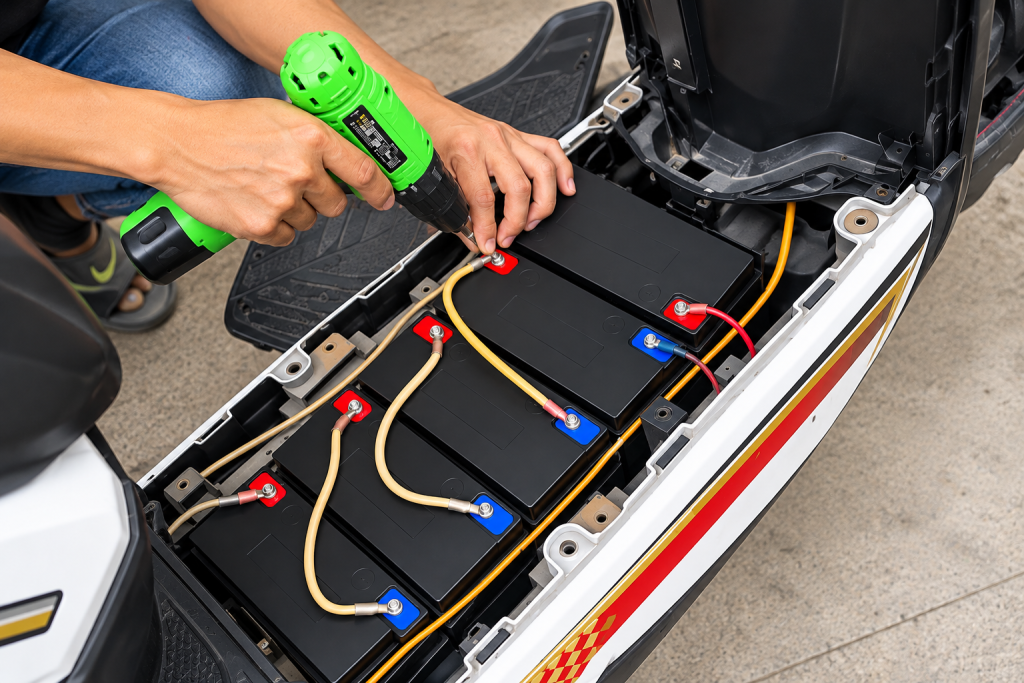
An electric motorcycle typically uses 4, 5, or 6 batteries rated at 12V each, depending on the electrical system voltage and vehicle design. Among electric two-wheelers using lead-acid batteries, 48V, 60V, and 72V battery configurations are commonly found.
So, how many batteries does an electric motorcycle need? How does the number of batteries affect riding range? Let’s explore these questions with XUPAI.
1. How Many Batteries Does an Electric Motorcycle Typically Use?
The number of electric motorcycle batteries depends on the rated voltage of the battery pack. When multiple 12V batteries are connected in series, common configurations include:
| Battery Pack Voltage | Number of 12V Batteries |
| 48V | 4 batteries |
| 60V | 5 batteries |
| 72V | 6 batteries |
For example, an electric motorcycle with a 60V battery pack typically uses five 12V batteries connected in series. Similarly, a 72V battery pack generally consists of six 12V batteries.
These are common configurations for reference. The actual number of batteries should be determined according to the technical specifications of each vehicle. Electric motorcycles using lithium batteries have a different battery pack structure from those using conventional lead-acid batteries.
2. Why Do Electric Motorcycles Use Multiple Batteries?
There are two main reasons why electric motorcycles use multiple batteries.
Meeting voltage requirements: The motor and controller require a power supply with a suitable voltage. Connecting multiple 12V batteries in series increases the total voltage. For example, five 12V batteries connected in series form a 60V battery pack.
Meeting energy storage requirements: Battery capacity, measured in ampere-hours (Ah), indicates how much electrical charge a battery can deliver over time. When batteries with the same capacity are connected in series, the voltage increases while the Ah capacity generally remains unchanged.
The nominal energy of a battery pack can be calculated using the following formula:
Energy (Wh) = Voltage (V) × Capacity (Ah)
For example, a 60V–20Ah battery pack has a nominal energy of 1,200Wh, equivalent to 1.2kWh.
3. Does the Number of Batteries Determine Riding Range?
The number of batteries is not the only factor determining how far an electric motorcycle can travel on a single charge.
Riding range also depends on battery capacity, motor efficiency, vehicle load, riding speed, road conditions, and riding habits. Therefore, when comparing battery packs, users should consider both voltage and capacity rather than simply counting the number of batteries.
In addition, choosing batteries with specifications that do not match the vehicle’s design may affect performance and the safety of the electrical system.
4. What Should You Consider When Choosing Electric Motorcycle Batteries?
To select suitable lead-acid batteries for electric motorcycles, users should consider the following factors:
Correct voltage: Ensure the battery pack matches the vehicle’s technical requirements.
Suitable capacity: Choose the appropriate Ah rating according to the manufacturer’s recommendations.
Compatible dimensions and terminals: Ensure the batteries fit the battery compartment and can be connected correctly.
Compatible charger: Use a charger designed for the specific battery type and configuration.
Regular inspection: Monitor battery condition and investigate any unusual performance or signs of damage.
For battery packs consisting of multiple batteries connected in series, it is recommended to use batteries with compatible types, capacities, and technical characteristics. Do not increase the battery pack voltage or modify its configuration without confirming compatibility with the vehicle.
5. XUPAI – Battery Solutions for the Electric Vehicle Industry
Choosing the right battery helps support stable electric vehicle operation and meet different application requirements.
XUPAI provides battery solutions for the electric vehicle market, serving the needs of electric vehicle manufacturers, distributors, and dealers.