



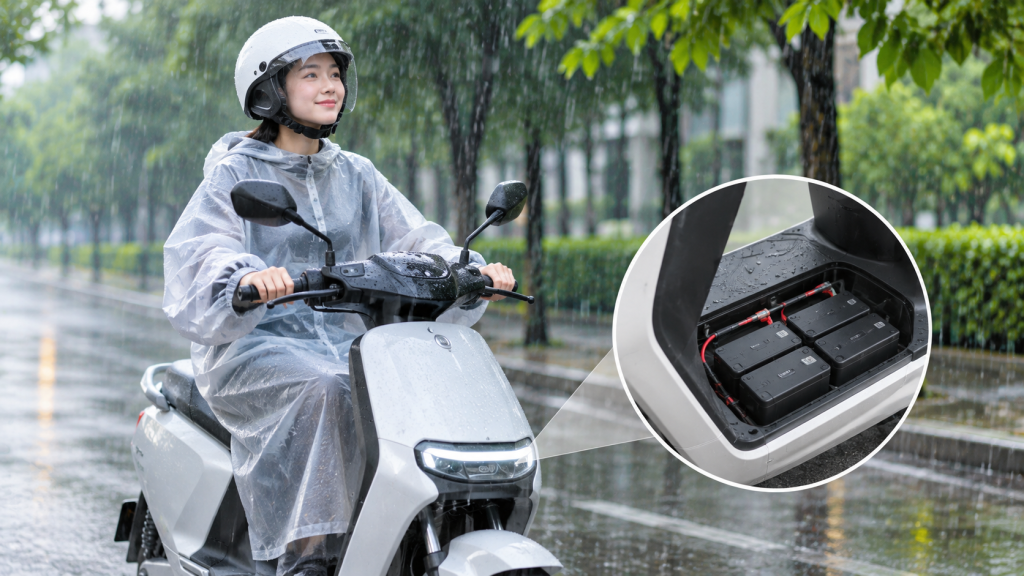
Electric bikes and electric scooters have become increasingly popular thanks to their convenience, cost efficiency, and environmentally friendly operation. However, rainy weather can create challenges for riders, especially when it comes to vehicle safety and electrical components.
So, what should you keep in mind when riding an electric bike in the rain? How can you protect your battery and prevent potential damage? Here are six essential tips from XUPAI to help you maintain your electric vehicle during the rainy season.
1. Avoid Riding Through Deep Floodwater
One of the most important precautions when using an electric bike during the rainy season is avoiding flooded roads.
Although some electric vehicles are designed with water-resistant components, this does not mean they are completely waterproof or suitable for riding through deep water.
Water may enter critical components, including:
The motor controller.
The electric motor and electrical connectors.
Wiring systems and cable connections.
Battery compartments and electrical terminals.
Water intrusion can cause electrical short circuits, unstable operation, or damage to electronic components.
Whenever possible, choose routes with less standing water. Avoid flooded areas, especially when the water level is high enough to reach the electrical components. If you suspect water has entered the vehicle, do not attempt to restart it before having it inspected.
2. Ride Slowly and Maintain a Safe Distance
Wet roads reduce tire grip and increase braking distances, making it more difficult to control an electric bike.
When riding in rainy weather, reduce your speed and avoid sudden movements. Keep these safety tips in mind:
Maintain a greater distance from vehicles ahead.
Avoid sudden acceleration or hard braking.
Do not ride through deep puddles when road conditions are unclear.
Use appropriate lights to improve visibility during heavy rain.
Regularly checking your tires and braking system is also important to ensure safe and stable operation.
3. Check the Battery and Electrical Components After Riding in the Rain
The battery is the primary energy source of an electric vehicle. For vehicles equipped with lead-acid batteries, keeping the battery compartment dry and maintaining clean electrical connections are essential.
After riding in the rain, check the following:
The external surfaces of the battery units.
Battery terminals and electrical connections.
The battery compartment for standing water or moisture.
Any unusual signs, such as terminal corrosion, strange odors, or abnormal heating.
If water enters the battery compartment or electrical connections become wet, stop using the vehicle and have it inspected by a qualified technician.
Do not attempt to disassemble or repair electrical connections without proper technical knowledge.
4. Do Not Charge Your Electric Bike Immediately After Riding in the Rain
This is an important precaution that many riders overlook.
After riding in wet conditions, the charging port, charger, and electrical connectors may still contain moisture. Connecting the charger while these components are wet can create electrical safety risks.
Before charging, follow these steps:
Turn off the vehicle and park it in a dry, well-ventilated area.
Wipe the exterior of the vehicle with a clean, dry cloth.
Check that the charging port and charger connectors are completely dry.
Only charge the battery when all relevant components are dry and show no signs of damage.
Avoid using high-temperature hair dryers directly on electrical components. If you suspect water has entered the charging system, consult a technician before charging.
5. Store Your Electric Vehicle in a Dry Place
After riding in the rain, avoid leaving your electric vehicle wet for extended periods.
Use a soft cloth to dry the vehicle’s body, seat, footrest, and other areas where water may accumulate.
Whenever possible, park your electric bike indoors or under a roof. Avoid prolonged exposure to rain and moisture.
Proper storage helps reduce terminal corrosion, metal deterioration, and potential damage to electrical components.
6. When Should You Have Your Electric Bike Inspected?
If your electric vehicle shows unusual symptoms after riding in the rain, stop using it and arrange a professional inspection.
Warning signs include:
Difficulty starting the vehicle.
Intermittent or unstable operation.
Unusual battery indicator readings.
Unexpected power loss.
Burning smells or abnormal heating.
If the vehicle has been exposed to flooding or you suspect water has entered the battery compartment, controller, or electrical system, professional inspection is necessary before further operation.
Do not repeatedly attempt to restart or charge the vehicle to test whether it still works, as this may worsen the damage.
Riding an electric bike in the rain does not necessarily lead to damage when proper precautions are taken. Avoiding flooded roads, riding carefully, checking the battery, and ensuring electrical components are completely dry before charging are essential practices for rainy weather.
XUPAI recommends regular vehicle maintenance, proper electrical system inspections, and choosing high-quality batteries suitable for your vehicle. Small but consistent maintenance habits can help maintain reliable performance and extend battery service life, even during the rainy season.