



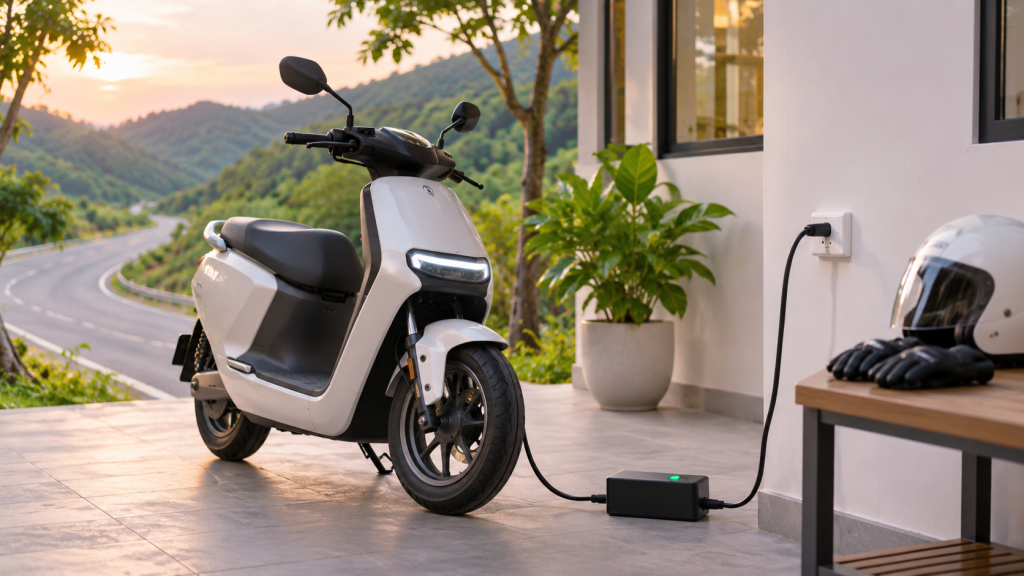
After a long journey, many electric scooter users tend to plug in their vehicles immediately to prepare for the next trip. However, is charging an electric scooter after a long ride really good for the battery? Can charging while the battery is still hot affect its performance and service life? Understanding the right charging time can help protect your battery and maintain reliable operation.
1. Should You Charge an Electric Scooter Immediately After a Long Ride?
It is generally better not to rush into charging immediately after a long journey, especially if the battery is still unusually warm.
During operation, the battery continuously supplies power to the motor. Extended discharge, combined with ambient temperature and riding conditions, can cause the battery temperature to rise.
Charging while the battery is excessively hot may increase thermal stress during the charging process. Over time, repeated exposure to unsuitable temperatures can affect battery performance and service life.
Therefore, after a long ride, allow your electric scooter to rest and let the battery temperature return to a normal level before charging.
2. How Long Should You Wait Before Charging?
There is no single waiting time that applies to every electric scooter or battery type. The appropriate waiting period depends on riding distance, load, ambient temperature, and the actual battery condition.
Here are some general recommendations:
After a short ride: If the battery shows no signs of unusual heating, charging can generally begin after a short rest, following the manufacturer’s instructions.
After a long ride: Allow the scooter to rest and wait until the battery returns to a normal temperature before charging.
If the battery is unusually hot: Do not start charging. Have the battery inspected and identify the cause before using it again.
The most important factor is the actual battery temperature and condition, rather than relying on a fixed waiting time.
3. Why Should You Avoid Charging an Overheated Battery?
Lead-acid batteries, commonly used in electric scooters, rely on electrochemical reactions to store and deliver energy. Temperature plays an important role in these processes.
When battery temperature rises excessively, self-discharge and internal corrosion may accelerate. Repeated charging under unsuitable temperature conditions can gradually reduce battery service life.
Potential effects include:
Increased heat generation during charging.
Greater water loss in flooded lead-acid batteries.
Increased wear on internal battery components.
Reduced performance and service life due to prolonged thermal stress.
If you notice swelling, electrolyte leakage, unusual odors, or excessive heat, stop using and charging the battery. Have it inspected by a qualified technician before further operation.
4. Five Tips for Charging Your Electric Scooter After a Long Ride
To maintain battery performance and support longer service life, follow these practical recommendations:
Allow the battery to cool down: Avoid charging immediately after an extended journey if the battery is still hot.
Use a compatible charger: Choose a charger with the correct voltage and charging current for your battery type.
Charge in a well-ventilated area: Keep the charging area away from heat sources and flammable materials.
Inspect the battery regularly: Check for unusual heating, swelling, leakage, or other visible damage.
Follow the recommended charging procedure: Avoid unnecessary prolonged charging and follow the manufacturer’s instructions.
Charging an electric scooter immediately after a long ride is not always the best practice. Allowing the battery to rest and checking its temperature before charging can help reduce unnecessary thermal stress.
For lead-acid batteries, using a compatible charger, maintaining suitable charging conditions, and avoiding excessive heat are essential practices for maintaining reliable performance and extending battery service life.
XUPAI – Powering Every Journey with Reliable Energy Solutions.