



Electric vehicle batteries are components that store and supply electrical energy, helping vehicles operate stably while in use. Unlike lithium batteries, lead-acid batteries are still widely used in many electric motorcycle models thanks to their suitable current output, reasonable cost, and ease of replacement.
So, how are electric vehicle batteries constructed and how do they work? Let’s explore the details with XUPAI in the article below.
1. What Is an Electric Vehicle Battery?
An electric vehicle battery is a device capable of storing electrical energy in chemical form and converting it back into electrical energy when the vehicle operates.
In an electric vehicle system, multiple batteries are often connected together to form a battery pack with a voltage suitable for the motor and the vehicle’s electrical system.
Battery capacity and voltage directly affect vehicle performance, operating time, and the load the vehicle can support.
2. Structure of an Electric Vehicle Battery
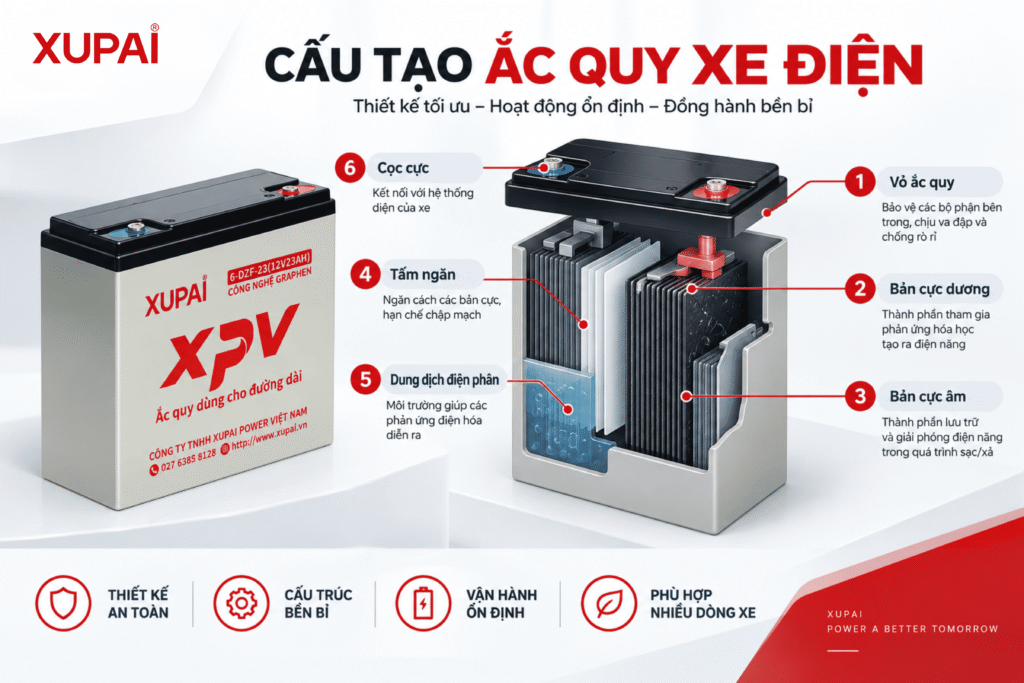
Electric vehicle batteries, especially sealed lead-acid batteries, generally consist of the following main components:
- Battery casing: Protects the internal components and contains the electrochemical materials.
- Positive and negative plates: Carry out the energy conversion process during charging and discharging.
- Electrolyte: Provides the medium in which electrochemical reactions take place.
- Separator: Keeps the plates separated and helps prevent internal short circuits.
- Terminals: Provide the connection between the battery and the vehicle’s electrical system.
- Safety valve: Used in some sealed battery designs to help control internal pressure.
Depending on the technology and design, the actual internal structure may vary between different battery models.
3. Operating Principle of an Electric Vehicle Battery
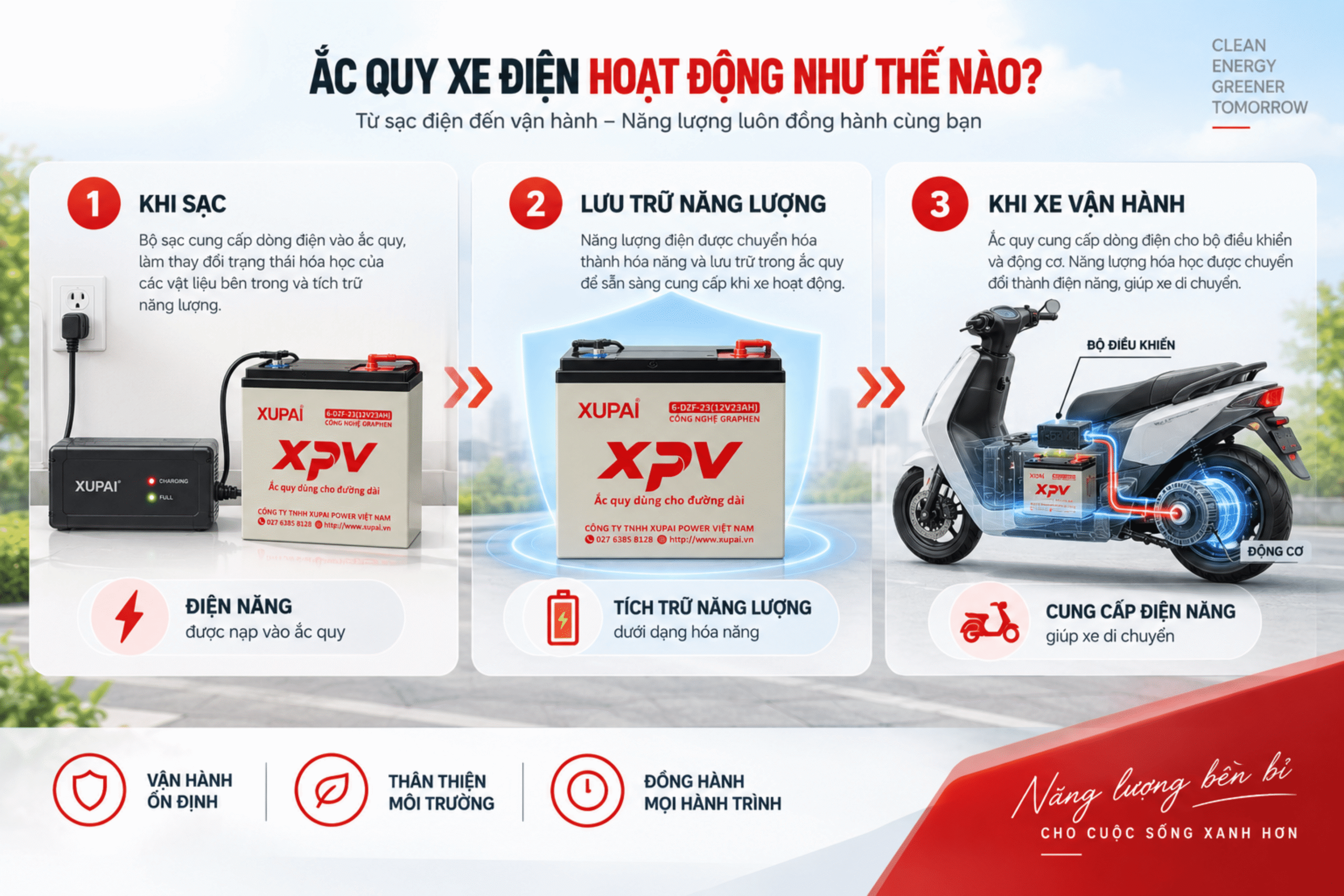
The battery operates based on a reversible electrochemical reaction between the plates and the electrolyte.
During Charging
The charger supplies electrical current to the battery, changing the chemical state of the internal materials and storing energy for later use.
When the Vehicle Is Operating
When the user operates the vehicle, the battery supplies electrical current to the controller and motor. Chemical energy is converted into electrical energy, which is then supplied to the motor to generate movement.
As the battery’s stored energy decreases, the vehicle may show signs such as reduced power or shorter operating time. At this point, the battery should be recharged according to the recommended instructions.
4. How to Help an Electric Vehicle Battery Last Longer
Battery life depends not only on product quality but also on how the battery is used and maintained.
Some important principles to keep in mind include:
- Use a compatible charger.
- Avoid allowing the battery to become completely discharged too frequently.
- Charge the battery in a dry, well-ventilated area.
- Regularly inspect the terminals and wiring.
- Do not continue using the battery if it becomes swollen, cracked, leaking, or excessively hot.
- Follow the manufacturer’s technical instructions.
5. XUPAI Electric Vehicle Batteries
XUPAI develops a range of batteries for electric vehicles designed to meet usage requirements under various operating conditions. Choosing the correct battery capacity, voltage, and battery type for each vehicle model is an important factor in ensuring stable system performance.
Understanding the structure and operating principle of a battery helps users use, charge, and maintain the product more effectively.